What is Blood Pressure?
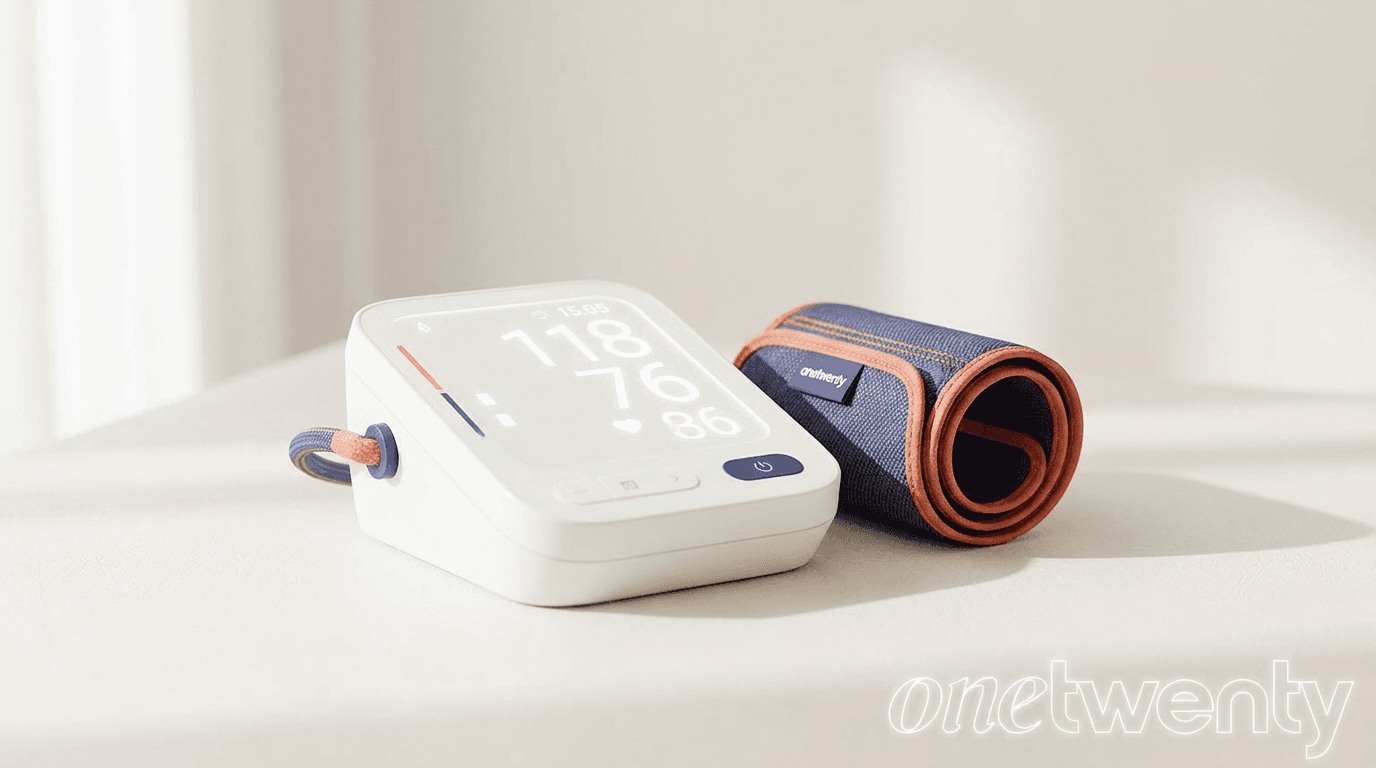
Blood pressure is the force that your blood exerts against the walls of your arteries as your heart pumps it throughout your body. It’s measured using two numbers: systolic pressure (the top number), which represents the pressure when your heart contracts and pushes blood out, and diastolic pressure (the bottom number), which represents the pressure when your heart relaxes between beats.[1][2] Think of your cardiovascular system like a garden hose connected to a faucet. The systolic pressure is like the surge of water when you first turn on the faucet, while the diastolic pressure is the baseline pressure that remains in the hose between surges. Just as too much water pressure can damage a garden hose over time, chronically elevated blood pressure damages your arteries and the organs they supply. Blood pressure is expressed as systolic over diastolic—for example, “120 over 80” or written as 120/80 mm Hg (millimeters of mercury, the unit used to measure pressure). This measurement reflects the dynamic interplay between your heart’s pumping force, the resistance in your blood vessels, and the volume of blood in your circulation.[1]
The Landmark Discovery: Blood Pressure as a Risk Factor
The connection between high blood pressure and heart disease is one of the most important discoveries in modern medicine. This understanding emerged largely from the Framingham Heart Study, a groundbreaking research project that began in 1948 in Framingham, Massachusetts, and continues to this day.[3][4][5] In 1961, researchers William Kannel and colleagues published a landmark paper that introduced the term “risk factor” to the medical vocabulary. Using data from the first years of the Framingham study, they demonstrated that elevated blood pressure was one of the most important risk factors for the development of coronary heart disease.[3][5] This was revolutionary—for the first time, doctors had scientific evidence that a measurable vital sign could predict future heart disease. The Framingham researchers went on to show that hypertension was also a “premier risk factor” for stroke and heart failure.[3] Notably, the study identified the primacy of systolic blood pressure (the top number) in terms of contributions to cardiovascular risk—a finding that took several decades to be widely accepted and acted upon.[3]
How High Blood Pressure Damages Your Body
Elevated blood pressure doesn’t cause symptoms in most people—which is why it’s often called the “silent killer.” However, the pressure load that comes with chronically raised blood pressure causes progressive damage to multiple organs and tissues over time.[6][7][8] In your blood vessels: High blood pressure causes endothelial dysfunction (damage to the inner lining of arteries), accelerates atherosclerosis (plaque buildup), and leads to remodeling and stiffening of both small and large arteries. Vascular remodeling may actually be the first manifestation of target organ damage in hypertension—studies show that 100% of patients with even mild (stage 1) hypertension have small vessel remodeling.[9][10] In your heart: The pressure overload causes your heart muscle to thicken (left ventricular hypertrophy), which can progress to heart failure. High blood pressure also promotes atrial fibrillation, coronary artery disease, and damage to the small blood vessels that supply the heart muscle itself.[6][8] In your brain: Elevated blood pressure increases the risk of stroke (both from blocked arteries and bleeding), contributes to the development of small areas of damage in the brain’s white matter, and is a major risk factor for vascular dementia.[6][8] In your kidneys: High blood pressure damages the delicate filtering units of the kidneys, leading to protein in the urine, reduced kidney function, and potentially kidney failure.[6][8]
The Cumulative Exposure Concept: Why Blood Pressure Matters at Every Age
One of the most important insights from blood pressure research is that cardiovascular risk accumulates over your lifetime. Just as we now understand that lifetime exposure to elevated LDL cholesterol drives atherosclerosis, cumulative exposure to elevated blood pressure is a powerful predictor of cardiovascular disease—above and beyond what a single blood pressure measurement can tell us.[12][13][14] A study combining data from over 11,500 people across five U.S. community-based cohorts found that lower 10-year cumulative systolic blood pressure in middle age was associated with 4.1 years longer survival and 5.4 years later onset of cardiovascular disease.[12] Importantly, cumulative blood pressure predicted cardiovascular events even after accounting for current blood pressure—meaning that your blood pressure history matters, not just your blood pressure today.[12] The CARDIA study followed young adults (average age 25 at enrollment) for over 30 years and found that cumulative blood pressure from young adulthood was strongly associated with subsequent risk of heart failure, coronary heart disease, stroke, and overall cardiovascular disease.[15] Cumulative blood pressure provided better risk prediction than a single blood pressure measurement or even changes in blood pressure over time.[15] The following figure from the CARDIA study shows how blood pressure classification in young adults (before age 40) predicts cardiovascular events later in life: Figure 1 Cumulative Incidence of Cardiovascular Disease (CVD) Events Among Participants in the Coronary Artery Risk Development in Young Adults (CARDIA) Study by Blood Pressure (BP) Group undefined Perhaps most striking is recent evidence that elevated blood pressure in childhood predicts premature cardiovascular death in adulthood. A study following children from age 7 for nearly five decades found that those with hypertension or elevated blood pressure in childhood had significantly higher cumulative risk of cardiovascular death by their mid-50s—but no increased risk of non-cardiovascular death, supporting a specific biological link between early blood pressure elevation and later cardiovascular disease.[17]
Understanding Your Blood Pressure Numbers
The 2025 American Heart Association/American College of Cardiology guidelines define blood pressure categories as follows:[8][18][19]
- Normal: Systolic less than 120 mm Hg AND diastolic less than 80 mm Hg
- Elevated: Systolic 120-129 mm Hg AND diastolic less than 80 mm Hg
- Stage 1 Hypertension: Systolic 130-139 mm Hg OR diastolic 80-89 mm Hg
- Stage 2 Hypertension: Systolic 140 mm Hg or higher OR diastolic 90 mm Hg or higher
- Hypertensive Crisis: Systolic higher than 180 mm Hg AND/OR diastolic higher than 120 mm Hg (requires immediate medical attention) These thresholds were lowered in 2017 based on evidence that cardiovascular risk begins to increase at blood pressure levels previously considered “normal” or “prehypertension.” The relationship between blood pressure and cardiovascular risk is continuous—there is no sharp threshold where “safe” suddenly becomes “dangerous.”[20][18][1]
Treatment Thresholds and Goals
Not everyone with elevated blood pressure needs medication immediately. Current guidelines recommend:[8][19] Lifestyle modifications for everyone with elevated blood pressure or hypertension. Medication is generally recommended for:
- All adults with blood pressure ≥140/90 mm Hg
- Adults with blood pressure ≥130/80 mm Hg who have established cardiovascular disease, diabetes, chronic kidney disease, or a 10-year cardiovascular risk ≥7.5%[8] Treatment goals: The 2025 guidelines recommend an office blood pressure goal of less than 130/80 mm Hg for adults with confirmed hypertension, with encouragement to further reduce systolic blood pressure to less than 120 mm Hg if tolerated.[19]
The SPRINT Trial: Evidence for Intensive Blood Pressure Control
The SPRINT (Systolic Blood Pressure Intervention Trial) was a landmark study that transformed our understanding of optimal blood pressure targets. The trial randomly assigned over 9,300 adults at increased cardiovascular risk (but without diabetes or prior stroke) to either intensive treatment (targeting systolic blood pressure less than 120 mm Hg) or standard treatment (targeting less than 140 mm Hg).[27] The results were striking: intensive treatment reduced major cardiovascular events by 25% and all-cause mortality by 27% compared to standard treatment.[27] The trial was stopped early because the benefits were so clear. The number needed to treat with intensive blood pressure control to prevent one cardiovascular event was 61, and to prevent one death was 90, over approximately 3.3 years.[27][28] This figure from SPRINT shows the cumulative hazard curves for the primary cardiovascular outcome (Panel A) and all-cause mortality (Panel B), demonstrating sustained and growing separation between the intensive and standard treatment groups over time.[29] Importantly, the benefits of intensive treatment were consistent across all subgroups examined, including participants 75 years of age or older.[27] However, intensive treatment did come with trade-offs: rates of hypotension, electrolyte abnormalities, acute kidney injury, and syncope were higher in the intensive treatment group.[27] The SPRINT findings have been supported by subsequent meta-analyses showing that every 5 mm Hg reduction in systolic blood pressure reduces major cardiovascular events by approximately 10%, regardless of baseline blood pressure or history of cardiovascular disease.[1]
How is Blood Pressure Measured?
Accurate blood pressure measurement is essential for diagnosis and treatment decisions. The American Heart Association recommends the following technique:[22]
Preparation:
- Sit quietly for 3-5 minutes before measurement
- Avoid caffeine, exercise, and smoking for at least 30 minutes beforehand
- Empty your bladder
- Sit in a chair with your back supported and feet flat on the floor (not on an exam table)
- Don’t talk during the rest period or measurement
Technique:
- Use a validated upper-arm cuff device with appropriate cuff size (the bladder should encircle 75-100% of your arm)
- Support your arm at heart level (resting on a desk or table)
- At the first visit, measure blood pressure in both arms and use the arm with the higher reading for future measurements
- Take at least two readings, separated by 1-2 minutes, and average them
How Can You Lower Your Blood Pressure?
The good news is that blood pressure is highly responsive to lifestyle modifications—often more so than other cardiovascular risk factors. Each of the following interventions can reduce systolic blood pressure by approximately 4-8 mm Hg in people with hypertension, and combining multiple interventions can achieve even greater reductions.[24][8]
Lifestyle Modifications
Weight loss is one of the most effective interventions. A sustained weight loss of 5% or more of body weight can reduce systolic blood pressure by 6-8 mm Hg in people with hypertension. As a general rule, expect approximately 1 mm Hg reduction in systolic blood pressure for every kilogram of weight lost.[24][8] The DASH diet (Dietary Approaches to Stop Hypertension) emphasizes fruits, vegetables, whole grains, and low-fat dairy products while limiting saturated fat and sodium. In clinical trials, the DASH diet reduced blood pressure by approximately 11/6 mm Hg compared to a typical American diet—an effect comparable to some blood pressure medications.[25][1] Sodium reduction has a direct, approximately linear relationship with blood pressure. Reducing sodium intake by 1,000 mg per day lowers systolic blood pressure by approximately 3 mm Hg. The optimal goal is less than 1,500 mg per day, though any reduction helps.[24][8] Practical strategies include eating fresh rather than processed foods, reading food labels, and using herbs and spices instead of salt. Potassium-enriched salt substitutes (which replace some sodium chloride with potassium chloride) can reduce systolic blood pressure by 5-7 mm Hg while also reducing cardiovascular events and mortality.[8][21] Physical activity reduces blood pressure through multiple mechanisms. Aim for 90-150 minutes per week of moderate-intensity aerobic exercise (like brisk walking). Aerobic exercise reduces systolic blood pressure by 4-8 mm Hg on average. Interestingly, isometric resistance training (like handgrip exercises) may be particularly effective, reducing systolic blood pressure by 5-10 mm Hg.[8] Alcohol reduction lowers blood pressure, especially in those who drink heavily. For people consuming 6 or more drinks per day who reduce intake by 50%, blood pressure drops by approximately 5.5/4 mm Hg. Current guidelines suggest that abstinence is optimal for overall health.[8] Stress management techniques including meditation and controlled breathing exercises can reduce systolic blood pressure by 5-7 mm Hg.[8]
Medications That Lower Blood Pressure
If lifestyle changes aren’t enough to control blood pressure, doctors usually start with one of four well-studied medication types that work in different ways to lower pressure safely. Diuretics (“water pills”) help your body get rid of extra salt and fluid, which lowers blood volume. ACE inhibitors and ARBs both relax blood vessels by blocking hormones that normally tighten them, with ARBs tending to cause less cough. Calcium channel blockers relax blood vessel walls directly so blood can flow more easily. Most people tolerate these medications well, and your clinician will choose among them based on your health history, side effects, and how your body responds.[25][8][24]
References
- Arterial Hypertension. Brouwers S, Sudano I, Kokubo Y, Sulaica EM. Lancet (London, England). 2021;398(10296):249-261. doi:10.1016/S0140-6736(21)00221-X.
- 10. Cardiovascular Disease and Risk Management: Standards of Care in Diabetes-2026. American Diabetes Association Professional Practice Committee for Diabetes*. Diabetes Care. 2026;49(Supplement_1):S216-S245. doi:10.2337/dc26-S010.
- Framingham Heart Study: JACC Focus Seminar, 1/8. Andersson C, Nayor M, Tsao CW, Levy D, Vasan RS. Journal of the American College of Cardiology. 2021;77(21):2680-2692. doi:10.1016/j.jacc.2021.01.059.
- 70-Year Legacy of the Framingham Heart Study. Andersson C, Johnson AD, Benjamin EJ, Levy D, Vasan RS. Nature Reviews. Cardiology. 2019;16(11):687-698. doi:10.1038/s41569-019-0202-5.
- The Framingham Heart Study and the Epidemiology of Cardiovascular Disease: A Historical Perspective. Mahmood SS, Levy D, Vasan RS, Wang TJ. Lancet (London, England). 2014;383(9921):999-1008. doi:10.1016/S0140-6736(13)61752-3.
- Salt Reduction to Prevent Hypertension and Cardiovascular Disease: JACC State-of-the-Art Review. He FJ, Tan M, Ma Y, MacGregor GA. Journal of the American College of Cardiology. 2020;75(6):632-647. doi:10.1016/j.jacc.2019.11.055.
- Molecular Interactions of Arterial Hypertension in Its Target Organs. Kućmierz J, Frąk W, Młynarska E, Franczyk B, Rysz J. International Journal of Molecular Sciences. 2021;22(18):9669. doi:10.3390/ijms22189669.
- 2025 AHA/ACC/AANP/AAPA/ABC/ACCP/ACPM/AGS/AMA/ASPC/NMA/PCNA/SGIM Guideline for the Prevention, Detection, Evaluation, and Management of High Blood Pressure in Adults: A Report of the American College of Cardiology/American Heart Association Joint Committee on Clinical Practice Guidelines. Jones DW, Ferdinand KC, Taler SJ, et al. Journal of the American College of Cardiology. 2025;86(18):1567-1678. doi:10.1016/j.jacc.2025.05.007.
- Animal Models of Hypertension: A Scientific Statement From the American Heart Association. Lerman LO, Kurtz TW, Touyz RM, et al. Hypertension (Dallas, Tex. : 1979). 2019;73(6):e87-e120. doi:10.1161/HYP.0000000000000090.
- Systemic and Cardiac Microvascular Dysfunction in Hypertension. Durante A, Mazzapicchi A, Baiardo Redaelli M. International Journal of Molecular Sciences. 2024;25(24):13294. doi:10.3390/ijms252413294.
- Renin-Angiotensin System and Atherothrombotic Disease: From Genes to Treatment. Jacoby DS, Rader DJ. Archives of Internal Medicine. 2003;163(10):1155-64. doi:10.1001/archinte.163.10.1155.
- Association of Cumulative Systolic Blood Pressure With Long-Term Risk of Cardiovascular Disease and Healthy Longevity: Findings From the Lifetime Risk Pooling Project Cohorts. Reges O, Ning H, Wilkins JT, et al. Hypertension (Dallas, Tex. : 1979). 2021;77(2):347-356. doi:10.1161/HYPERTENSIONAHA.120.15650.
- Association of Incident Cardiovascular Disease With Time Course and Cumulative Exposure to Multiple Risk Factors. Domanski MJ, Wu CO, Tian X, et al. Journal of the American College of Cardiology. 2023;81(12):1151-1161. doi:10.1016/j.jacc.2023.01.024.
- Cumulative Systolic Blood Pressure Load and Cardiovascular Risk in Patients With Diabetes. Wang N, Harris K, Hamet P, et al. Journal of the American College of Cardiology. 2022;80(12):1147-1155. doi:10.1016/j.jacc.2022.06.039.
- Long-Term Cumulative Blood Pressure in Young Adults and Incident Heart Failure, Coronary Heart Disease, Stroke, and Cardiovascular Disease: The CARDIA Study. Nwabuo CC, Appiah D, Moreira HT, et al. European Journal of Preventive Cardiology. 2021;28(13):1445-1451. doi:10.1177/2047487320915342.
- Association of Blood Pressure Classification in Young Adults Using the 2017 American College of Cardiology/American Heart Association Blood Pressure Guideline With Cardiovascular Events Later in Life. Yano Y, Reis JP, Colangelo LA, et al. JAMA. 2018;320(17):1774-1782. doi:10.1001/jama.2018.13551.
- High Blood Pressure in Childhood and Premature Cardiovascular Disease Mortality. Freedman AA, Perak AM, Ernst LM, et al. JAMA. 2025;334(17):1555-1557. doi:10.1001/jama.2025.14405.
- Potential U.S. Population Impact Of the 2017 ACC/AHA High Blood Pressure Guideline. Muntner P, Carey RM, Gidding S, et al. Journal of the American College of Cardiology. 2018;71(2):109-118. doi:10.1016/j.jacc.2017.10.073.
- Debate on the 2025 Guideline for the Prevention, Detection, Evaluation, and Management of High Blood Pressure in Adults: New Blood Pressure Targets, Lower Is Better-and Possible. Lauder L, Rahimi K, Böhm M, Mahfoud F. Hypertension (Dallas, Tex. : 1979). 2025;. doi:10.1161/HYPERTENSIONAHA.125.25466.
- 2017 ACC/AHA Blood Pressure Treatment Guideline Recommendations and Cardiovascular Risk. Colantonio LD, Booth JN, Bress AP, et al. Journal of the American College of Cardiology. 2018;72(11):1187-1197. doi:10.1016/j.jacc.2018.05.074.
- Hypertension in Adults: Initial Evaluation and Management. Clarke SL. American Family Physician. 2023;108(4):352-359.
- Measurement of Blood Pressure in Humans: A Scientific Statement From the American Heart Association. Muntner P, Shimbo D, Carey RM, et al. Hypertension (Dallas, Tex. : 1979). 2019;73(5):e35-e66. doi:10.1161/HYP.0000000000000087.
- Diabetes and Hypertension: A Position Statement by the American Diabetes Association. de Boer IH, Bangalore S, Benetos A, et al. Diabetes Care. 2017;40(9):1273-1284. doi:10.2337/dci17-0026.
- Treatment of Hypertension: A Review. Carey RM, Moran AE, Whelton PK. JAMA. 2022;328(18):1849-1861. doi:10.1001/jama.2022.19590.
- Initial Treatment of Hypertension. Taler SJ. The New England Journal of Medicine. 2018;378(7):636-644. doi:10.1056/NEJMcp1613481.
- Effects on Blood Pressure of Reduced Dietary Sodium and the Dietary Approaches to Stop Hypertension (DASH) Diet. Sacks FM, Svetkey LP, Vollmer WM, et al. The New England Journal of Medicine. 2001;344(1):3-10. doi:10.1056/NEJM200101043440101.
- FDA Orange Book. FDA Orange Book.
- Final Report of a Trial of Intensive versus Standard Blood-Pressure Control. SPRINT Research Group, Lewis CE, Fine LJ, et al. The New England Journal of Medicine. 2021;384(20):1921-1930. doi:10.1056/NEJMoa1901281. • 29. Generalizability of SPRINT Results to the U.S. Adult Population. Bress AP, Tanner RM, Hess R, et al. Journal of the American College of Cardiology. 2016;67(5):463-72. doi:10.1016/j.jacc.2015.10.037.