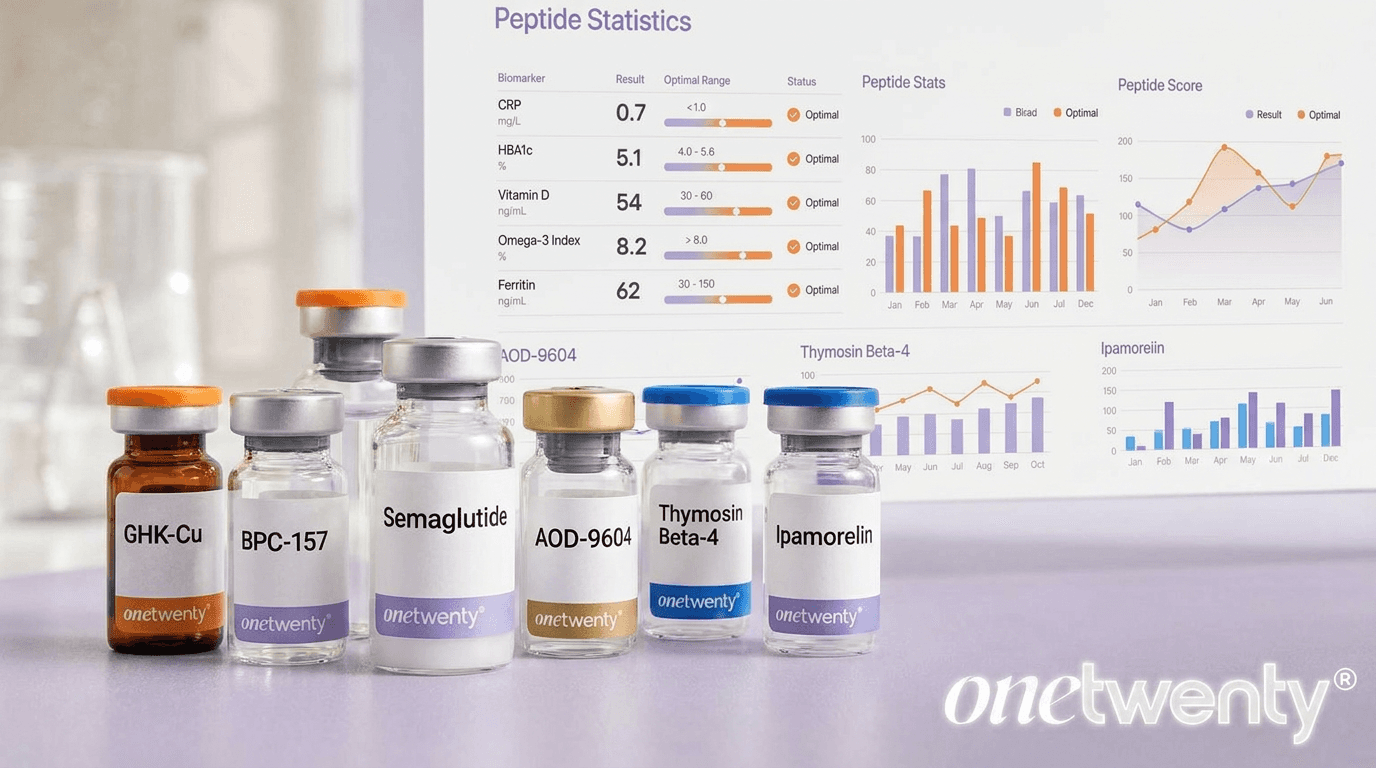
Statistics
Last Updated
Peptides are the quiet engine behind the loudest story in medicine. The same chemical class that gave us insulin a century ago now gives us the GLP-1 drugs reshaping how the world treats diabetes and obesity, and the money, the science, and the pipeline have all exploded along with it.
More than 100 peptide drugs have received FDA approval, and industry databases estimate that well over 1,000 peptide therapeutics are currently in clinical development worldwide. Here is the field by the numbers, updated for 2026. Every figure below is sourced, and where the number is a market estimate rather than a measured fact, it is labeled as one.
Peptides in four figures
How big is the peptide market?
Global peptide therapeutics market, 2024 to 2034
Market value in USD billions, plotted on a roughly 8% CAGR path. Anchored on published estimates for 2024, 2025, and 2034.
By one widely cited estimate the peptide therapeutics market was about $46 billion in 2024 and roughly $50 billion in 2025, and on a high-single-digit growth track it reaches around $100 billion by 2034. The curve above traces that path. Treat the shape, not the decimal: estimates for 2025 alone run from roughly $50 billion to over $130 billion depending on which insulins and GLP-1s a given report counts as peptides.
Global Market Insights. Years between the anchor points are the projected trajectory, not reported data. Other forecasts run higher.
What is driving the peptide market
Peptide therapeutics market by application, 2025
Share of market value. Segment definitions differ between research firms.
The single biggest reason peptides are booming is the GLP-1 class. According to several market analyses, metabolic diseases, including GLP-1 receptor agonists like semaglutide and tirzepatide, represented the largest segment of the peptide therapeutics market in 2025, at roughly two-thirds of value, although estimates vary among market research firms. The rest spans cancer, hormonal therapies, and a long tail of other conditions.
Grand View Research. Segment share is a commercial market estimate, not a clinical measurement.
GLP-1 therapies among the world's highest-selling medicines, 2025
Each pill represents one of the ten highest-selling prescription medicines by reported revenue.
Just how dominant are these drugs? Industry sales reports indicate that GLP-1 based therapies accounted for several of the world's highest-selling prescription medicines in 2025. A handful of molecules now move the entire category. How any given ranking lands depends on whether you count annual or quarterly revenue, and branded products or molecules, so treat the placement as an industry estimate rather than a fixed figure.
Company financial filings and industry sales rankings. Rankings vary by methodology.
Jastreboff et al., SURMOUNT-1, New England Journal of Medicine 2022. nejm.org
For what these compounds actually do in practice, see our guides to peptides for weight loss and peptides for muscle growth.
Where peptide drugs come from
Peptides are not new. The first peptide drug was insulin, first given to a patient in the 1920s, and for decades the category sat quietly in the background. The modern boom traces to an unlikely source. Exenatide, one of the earliest GLP-1 drugs, was developed from a compound found in the venomous saliva of the Gila monster, a desert lizard whose digestion runs in long, slow cycles. That biology turned out to be a near-perfect template for controlling human blood sugar.
A molecule from lizard venom helped launch the GLP-1 era.
Exenatide came out of the Gila monster's saliva. The lesson the industry took from it is that evolution has already solved a lot of signaling problems, which is part of why AI-driven discovery is now pointed at peptides.
Peptide drugs by route of administration
Approximate share. Oral formulations are the fastest-moving frontier.
The other defining fact about peptides is how they are delivered. Because the gut digests them like food, most peptides have to be injected, and injectables still account for roughly two-thirds of the market. The race now is oral delivery, the long-sought goal that would turn a weekly shot into a daily pill, and the first oral versions are already arriving.
ResearchAndMarkets; Mordor Intelligence. Route share is an industry estimate.
Which companies lead the peptide market
Approximate peptide market share by company group, 2024
Share of market value. The top five together held roughly 60%.
The market is concentrated. Novo Nordisk alone held more than 17% of it in 2024, and the top five companies, Novo, Eli Lilly, Bristol-Myers Squibb, Ferring, and Merck, controlled around 60% between them. The remaining 40% is split across a long tail of smaller players and contract manufacturers. If you are looking at who actually dispenses these compounds to patients, that is a different question, and we cover it in our guide to getting legal peptides online.
Global Market Insights. Company share is a commercial market estimate.
How many peptides are in clinical trials?
Approved peptide drugs vs peptides in clinical development
Count of molecules. Pipeline totals come from commercial industry databases.
More than 100 peptide drugs are already approved, but the development pipeline is roughly ten times that size. Industry databases estimate well over 1,000 peptides in active clinical development worldwide, with some sources putting the figure above 1,200. Metabolic and cancer treatments lead the research, and the FDA granted 47 peptide candidates orphan status in 2024 alone.
Roots Analysis; ResearchAndMarkets; US Food and Drug Administration. Pipeline counts vary by database and by how a peptide is defined.
Where peptide medicine goes next
Peptides are moving from a specialty corner of pharma to the center of it. Peptide therapeutics often provide greater target specificity than many small-molecule drugs, which can reduce off-target effects in some settings. However, their safety profiles vary depending on the individual drug and clinical indication, so specificity is not the same thing as safety. That specificity is a large part of why companies are pouring research into them, and why AI-driven discovery is now aimed squarely at finding new ones.
Two near-term shifts will decide how far the category spreads: the arrival of cheaper generics, with the FDA approving the first generic GLP-1, liraglutide, in August 2025, and the move to oral formulations that remove the needle. Both would push peptides well past the patients who use them today.
The takeaway
A century-old drug class became the center of pharma in five years.
If you are tracking what any of this means for your own physiology rather than the market, start with the biomarker library and our guide to the best blood test for longevity.
Sources & references
- Peptide therapeutics market size, trajectory, and company share, Global Market Insights. gminsights.com
- Peptide therapeutics market by application, Grand View Research. grandviewresearch.com
- Peptide clinical pipeline counts, Roots Analysis and ResearchAndMarkets. rootsanalysis.com
- Route of administration share, Mordor Intelligence. mordorintelligence.com
- Tirzepatide weight-loss outcomes, SURMOUNT-1, Jastreboff et al., New England Journal of Medicine 2022. nejm.org
- Peptide drug approvals, orphan designations, and the first generic GLP-1 (liraglutide, August 2025), US Food and Drug Administration. fda.gov
- GLP-1 revenue and sales rankings, company financial filings and industry sales rankings.
Figures are current as of 2026 and rounded. Market-size, segment-share, company-share, and pipeline estimates are commercial research projections that vary widely by source and by how a peptide drug is defined. They are not clinical measurements. This article is educational and is not medical advice.


How OneTwenty Works
Not your average
Checkup.
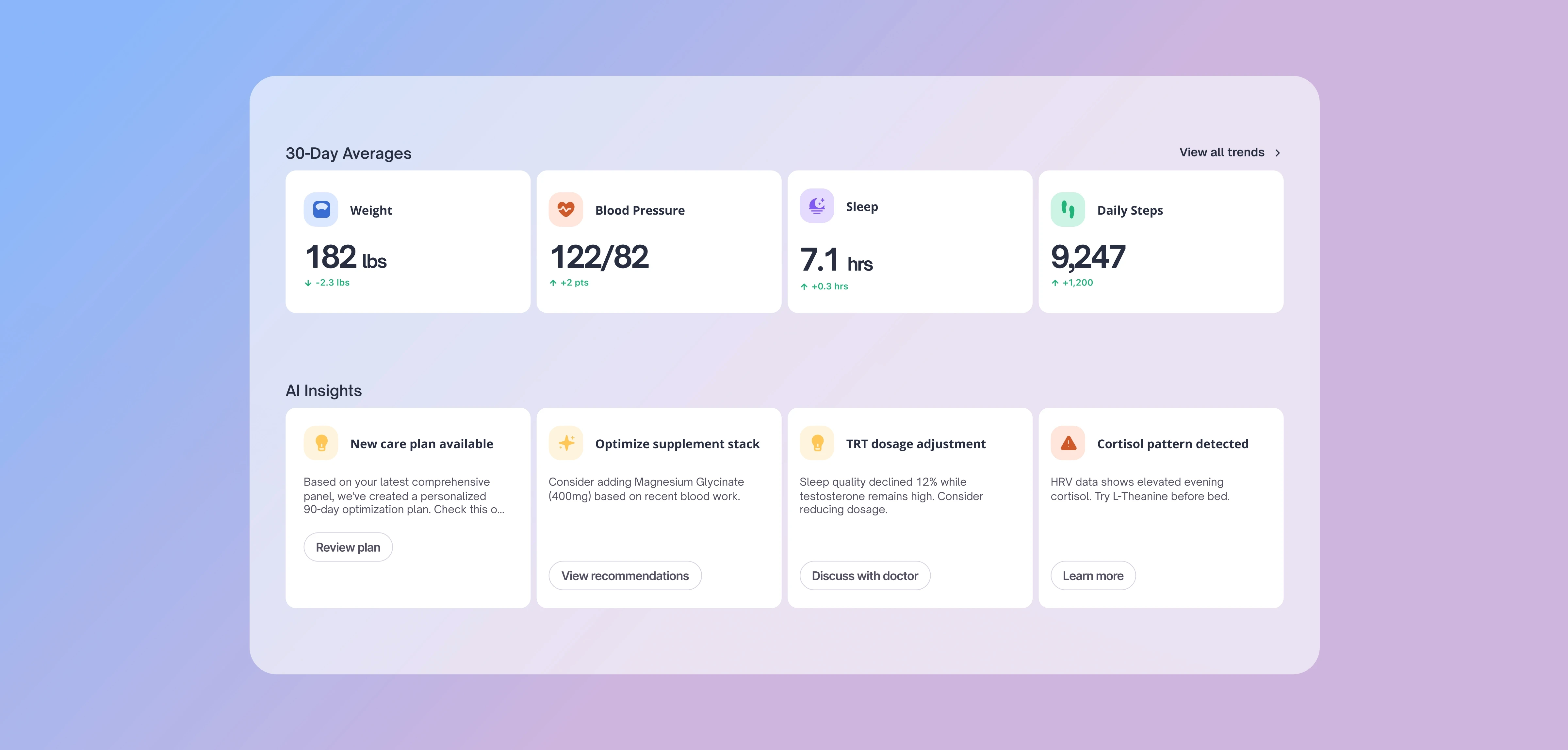
Every life stage brings new biological demands. Tracking the right metrics at the right time helps you adapt, optimize performance, and extend both lifespan and healthspan.
Your Annual Physical
Manual Data Processing
Guesswork Trend Detection
Once-a-year physical
Reactive, tested when sick
No data between visits
Once a year testing
Delayed Results
One-size dosing, set and forget
Real-Time Trend Insights
Daily smart-device data
Automated Data Sync
Quarterly Biomarker Tests
Optimal, personalized targets
Plain-language AI insights
Medications titrated to your data
Built to extend healthspan

Frequently Asked Questions
Clarity before
you commit
Answers on setup, scale, and support to remove blockers.