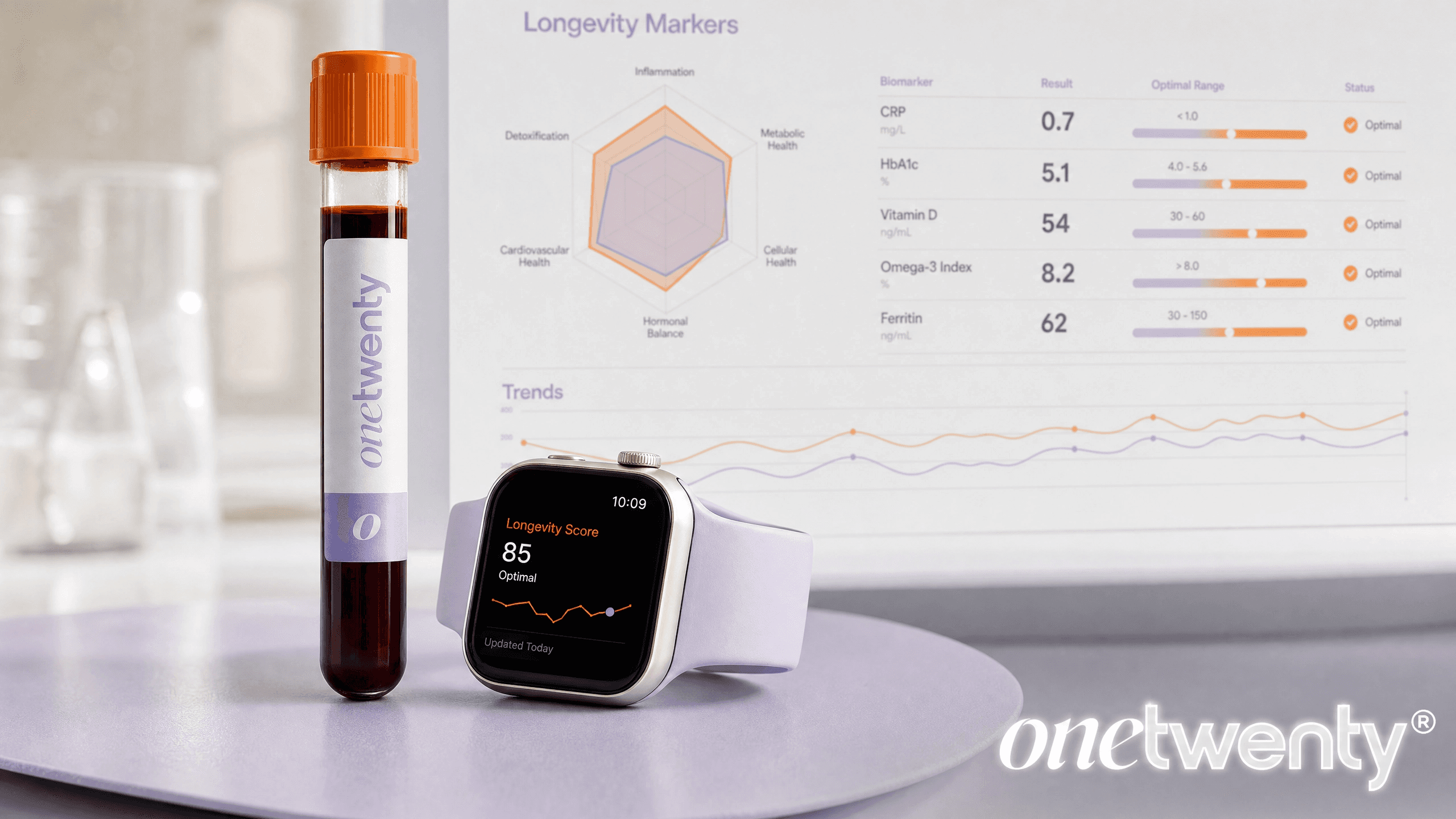
Longevity
Last Updated
Longevity testing has gone mainstream, and for good reason. A standard annual physical runs around 20 to 30 biomarkers and mostly flags what is already wrong.
The newer wave of services tests 100 or more markers, including the ones that predict risk years early, like ApoB, Lp(a), hs-CRP, fasting insulin, and homocysteine, then turns the data into a plan you can act on. This guide ranks the best of them for longevity, and explains what actually separates a great service from a glorified lab printout.
How we ranked them
What makes a longevity test worth it.
Four things separate a test you act on from a number you forget. We weighed each service against all four.
- Depth. It should test the markers that predict long-term risk, not just the basic lipid and metabolic panel your doctor already runs.
- Frequency. Longevity is a trend, not a snapshot. Testing more than once a year is what lets you see whether your changes are actually working.
- Actionability. Raw numbers are noise without interpretation. The best services translate results into a clear plan, ideally backed by a clinician rather than a dashboard alone.
- Integration. Blood is one input. The clearest picture comes from combining it with continuous data from your wearables, scale, and blood pressure cuff in one place.
At a glance
The five, side by side.
| Service | Price / year | Biomarkers | Testing | Device sync | Care model |
|---|---|---|---|---|---|
| OneTwenty | $499 | Comprehensive | Quarterly (4x) | Full device and wearable | Clinician-supervised |
| Function Health | $365 | 160+ | 2x per year | No | Clinician notes |
| Superpower | $199 | 100+ | 1x plus retest | Limited | AI plus advisors |
| InsideTracker | $149 plus test | Up to 54 | Varies | Fitness trackers | AI plus DNA option |
| SiPhox Health | From $124 | Up to 60+ | Flexible | No | Insights plus coaching |
Prices and biomarker counts are accurate as of mid-2026 and change often. Confirm current details on each provider's site.
The ranking
Best blood tests for longevity.
OneTwenty
The complete longevity systemBest for: people who want testing, continuous data, and care in one place.
Every other service on this list hands you a blood test and a dashboard. OneTwenty is the only one built as a full system. It runs comprehensive panels four times a year, folds your wearable, scale, and blood pressure data into the same profile, and pairs the results with clinician-supervised protocols you can act on, including hormone optimization and prescribable therapies. Longevity is something you manage over time, and OneTwenty is built around that loop of test, track, and adjust rather than a once-a-year snapshot.
The catch: at $499 a year it is the premium option here, peptides and medications are billed separately on top, and it launches in June 2026. If all you want is a single annual blood panel and nothing else, a cheaper one-off test will do the job.
Function Health
The deepest standalone panelBest for: the deepest standalone blood panel with expert interpretation.
Function is the benchmark for depth. Its membership covers 160+ lab tests across two draws a year, with written clinician notes that walk through your results system by system, all run through the Quest network of over 2,000 locations. After acquiring Ezra it now offers AI-read MRI and CT scans as paid add-ons. If your goal is the most thorough blood-and-imaging picture for the money, Function is hard to beat, and at $365 a year it is a genuine value.
The catch: it is blood and imaging only. There is no wearable or device integration, testing is twice a year rather than quarterly, and it does not provide ongoing treatment. You get a deep report, not connected care.
Superpower
The best value entry pointBest for: a low-cost first baseline.
At $199 a year for 100+ biomarkers, Superpower is the most affordable comprehensive panel here by a wide margin. It turns results into a plain-language plan with supplement and lifestyle guidance, lets you upload past labs to consolidate your history in one place, and backs it with AI chat and longevity advisors. For a first comprehensive baseline without a big spend, this is the obvious starting point.
The catch: interpretation leans on AI and advisors rather than written clinician notes, and it is a testing-and-guidance platform rather than connected care.
InsideTracker
Best for athletes and geneticsBest for: athletes who want blood plus genetics.
InsideTracker is performance-first. Its Ultimate test covers up to 54 biomarkers, with an optional DNA kit (or a sync with 23andMe and Ancestry) layered on top, a biological age estimate, and recommendations tuned for training, nutrition, and body composition. It is HSA and FSA eligible, which takes some of the sting out of the cost.
The catch: it is built for optimization in healthy, active people rather than medical care, the panel is narrower than Function's, and the Ultimate test pushes the real cost well above the $149 membership.
SiPhox Health
Best at-home, no lab visitBest for: testing from home without a blood draw.
SiPhox skips the lab entirely. Its at-home finger-prick kits, built on silicon-photonics technology, return up to 60+ biomarkers on the Ultimate 360 panel in a few days, with insights and coaching on the top tier and monthly plans that lower the per-test cost. If a trip to a draw site is the thing stopping you from testing at all, this removes the obstacle.
The catch: at-home finger-prick panels are smaller than a full venous draw, and like most of this list it is testing and insights rather than ongoing care.
From OneTwenty
Testing, your devices, and care in one place.
OneTwenty runs comprehensive panels four times a year, unifies them with your wearable and device data, and pairs the results with clinician-supervised care. It launches in June 2026. Join the beta to lock in early access.
Join the beta$499/yr membership for testing and care, peptides and medications billed separately
Common questions
Longevity testing, answered.
Which biomarkers matter most for longevity?
Beyond the standard lipid panel and CBC, the markers worth tracking include ApoB and Lp(a) for cardiovascular risk, hs-CRP for inflammation, fasting insulin and HbA1c for metabolic health, and homocysteine. A good longevity panel also covers hormones, thyroid, liver, kidney, and key nutrients.
How often should I test?
For tracking longevity, more than once a year. Quarterly is ideal, because it lets you see whether a change to diet, training, or a protocol is actually moving your numbers. Annual is the realistic minimum.
Are these covered by insurance?
Mostly no. These are out-of-pocket memberships rather than insurance-billed care, though many are HSA and FSA eligible, which can offset the cost.
Can I combine blood work with my wearable and scale data?
With most services on this list, not really. OneTwenty is the exception: your wearable, scale, and blood pressure data are unified with your labs in a single profile, so the blood work is read in the context of how you actually live day to day.
This article is educational and is not medical advice. Prices and biomarker counts are accurate as of mid-2026 and may change, so confirm current details with each provider before purchasing.



How OneTwenty Works
Not your average
Checkup.
Every life stage brings new biological demands. Tracking the right metrics at the right time helps you adapt, optimize performance, and extend both lifespan and healthspan.
Your Annual Physical
Manual Data Processing
Guesswork Trend Detection
Once-a-year physical
Reactive, tested when sick
No data between visits
Once a year testing
Delayed Results
One-size dosing, set and forget
Real-Time Trend Insights
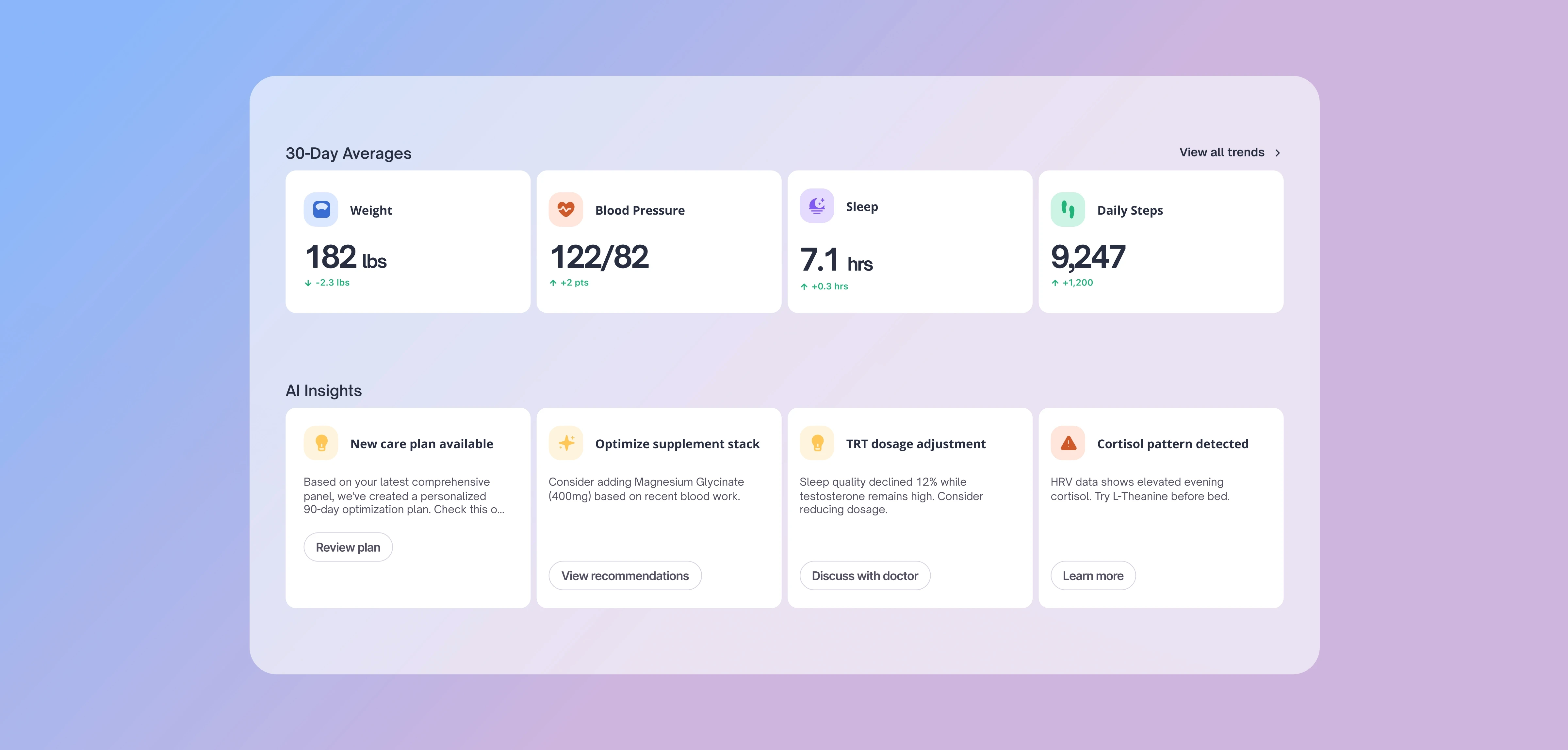
Daily smart-device data
Automated Data Sync
Quarterly Biomarker Tests
Optimal, personalized targets
Plain-language AI insights
Medications titrated to your data
Built to extend healthspan

Frequently Asked Questions
Clarity before
you commit
Answers on setup, scale, and support to remove blockers.