Longevity
Last Updated
Peptides have gone from a niche bodybuilding secret to one of the most talked-about categories in longevity medicine. Clinics prescribe them, influencers promote them, and compounding pharmacies sell them at record volume.
Here is the reality check most people need: the peptide space is the Wild West of longevity medicine. Some peptides have compelling preclinical and mechanistic data, although rigorous human clinical evidence supporting their use for longevity remains limited. Others ride a wave of animal studies and anecdotal reports that may or may not translate to meaningful human outcomes. The regulatory landscape shifted in 2024, when the FDA began restricting compounding pharmacies from producing certain peptides, making access more complicated than it was a year earlier. This guide walks through the peptides with the strongest cases for longevity, what the evidence actually says, and what a realistic, evidence-first approach looks like.
Side by side
The longevity peptide landscape.
Access and legal status reflect the United States as of 2026 and change frequently. Cost figures are approximate monthly ranges.
| Peptide | Primary mechanism | Evidence level | Access status (US, 2026) | Approx. monthly cost | Best use case |
|---|---|---|---|---|---|
| BPC-157 | Tissue repair, gut healing, angiogenesis | Moderate (strong animal, limited human) | Restricted (FDA compounding crackdown) | $50 to $150 | Gut health, injury and tissue repair |
| Epitalon | Telomerase activation, pineal support | Low to moderate (animal, small human) | Gray market / research use | $60 to $200 | Cellular aging, sleep regulation |
| Thymosin Alpha-1 | Immune modulation, T-cell function | Strong (approved in 35+ countries) | Available by prescription | $100 to $300 | Immune aging, infection support |
| GHK-Cu | Collagen synthesis, antioxidant, gene expression | Moderate (human skin, animal systemic) | Topical OTC, injectable by Rx | $30 to $100 | Skin aging, wound healing |
| FOXO4-DRI | Senolytic, clears senescent cells | Early (animal data only) | Research use only | $200 to $500+ | Cellular senescence |
| Humanin | Mitochondrial and neuroprotection | Early to moderate (human observational, animal) | Research use only | Varies | Mitochondrial aging, neurodegeneration |
| SS-31 (Elamipretide) | Mitochondrial membrane repair | Moderate (clinical trials ongoing) | Clinical trial / compassionate use | Not commercially available | Mitochondrial and cardiac aging |
| CJC-1295 / Ipamorelin | Growth hormone secretion | Moderate (human PK data, clinical use) | Restricted (FDA compounding crackdown) | $100 to $250 | Body composition, recovery, sleep |
The honest picture
It is all about the evidence spectrum.
The single most useful way to think about peptides is where each one sits on the evidence spectrum. At one end, Thymosin Alpha-1 has decades of clinical use and approval in many countries. At the other, FOXO4-DRI rests on a single mouse study. Most popular peptides fall in the middle: strong mechanistic rationale and compelling animal data, but limited or no rigorous human trials.
A qualitative summary of human evidence strength, not a precise score. Stronger means more and better-controlled human data. Compiled from the regulatory status and published literature for each peptide.
1. The recovery peptide
BPC-157
BPC-157 (Body Protection Compound-157) is probably the most widely discussed peptide in longevity and performance circles. It is a synthetic peptide derived from a protein found in human gastric juice. Animal studies suggest that BPC-157 may enhance tissue repair and gastrointestinal healing. However, there is currently no high-quality human evidence demonstrating improvements in longevity or age-related health outcomes.
The longevity relevance comes from two angles. First, gut health is increasingly recognized as a foundational pillar of aging well. Intestinal permeability, chronic low-grade inflammation originating in the GI tract, and poor nutrient absorption all accelerate biological aging, so a compound that supports gut mucosal integrity is relevant beyond sports injuries. Second, the body's ability to repair itself declines with age, and a compound that enhances tissue repair has clear implications for maintaining functional capacity.
The caveat is large: almost all published research is in animals. There are no large, peer-reviewed human clinical trials, and the clinical experience is mostly anecdotal. That does not mean it does not work, but the evidence bar is far lower than for something like metformin or statins. Access is also harder now. The FDA moved to restrict compounding pharmacies from producing BPC-157 in late 2023 and 2024, citing it as a new drug without approval.
Who it is for: people with chronic gut issues, slow-healing injuries, or tissue-repair concerns who are working with a knowledgeable prescriber.
2. The immune aging peptide
Thymosin Alpha-1
Thymosin Alpha-1 has the strongest clinical evidence among the peptides discussed, primarily for immune modulation and selected infectious and oncologic indications, rather than for proven longevity benefits. It is approved as a pharmaceutical in over 35 countries for conditions including hepatitis B, hepatitis C, and as an immune adjuvant in cancer treatment. It has a clinical pedigree most peptides on this list simply do not have.
It works by modulating the immune system, specifically by enhancing T-cell maturation and function. That matters for longevity because immune decline, or immunosenescence, is one of the hallmark drivers of aging. As the thymus shrinks with age, the body produces fewer naive T-cells, leaving you more vulnerable to infection, cancer, and chronic inflammation. Thymosin Alpha-1 helps compensate for some of that decline while also helping regulate overactive inflammation. The evidence here is meaningfully stronger than most peptides, with published clinical trials in immune-compromised populations and a safety profile established over decades of use, though that evidence is for immune indications rather than lifespan extension.
Who it is for: adults with age-related immune decline or frequent infections, or those seeking immune optimization as part of a broader, physician-guided protocol.
3. The telomerase peptide
Epitalon
Epitalon is a synthetic version of Epithalamin, a peptide naturally produced by the pineal gland. It was developed by Russian gerontologist Vladimir Khavinson, whose research over several decades focused on the role of short peptides in aging.
Experimental studies suggest that Epitalon may influence telomerase activity, the enzyme that maintains telomere length, although robust clinical evidence confirming this effect in humans is currently lacking. Telomeres, the protective caps on the ends of chromosomes, shorten with each cell division, and their erosion is one of the most established hallmarks of aging. In theory, influencing telomerase could slow or partly reverse this aspect of cellular aging. Khavinson's published work includes increased telomerase activity in human cell cultures and small human trials reporting improvements in melatonin, sleep, and certain aging biomarkers, though much of it comes from Russian institutions and has not been replicated by independent Western labs.
The honest take: Epitalon is theoretically compelling but the evidence base is thin by Western clinical standards. Telomerase activation also carries a theoretical risk, since cancer cells upregulate telomerase to achieve immortality. Whether low-dose use in healthy adults poses any meaningful cancer risk is unknown, but it is a consideration serious physicians weigh.
Who it is for: people interested in telomere biology who are comfortable with a limited but intriguing evidence base.
4. The tissue remodeling peptide
GHK-Cu
GHK-Cu (glycyl-L-histidyl-L-lysine copper complex) is a naturally occurring peptide present in human plasma, saliva, and urine. Levels decline significantly with age, with plasma concentration dropping by roughly 60% between age 20 and 60, which makes it an interesting target for restoration.
What makes GHK-Cu unique is its apparent ability to influence gene expression broadly. Experimental studies suggest that GHK-Cu influences the expression of thousands of genes involved in tissue repair and inflammation. Whether these molecular effects translate into meaningful systemic anti-aging benefits in humans remains unknown. Most established human data is in dermatology, where it is well proven to stimulate collagen synthesis, improve skin elasticity, and accelerate wound healing, and it is widely available in topical skincare. The more speculative longevity application is systemic use by injection, where the hope is that the gene-expression effects extend to organs, connective tissue, and the vascular system.
Who it is for: anyone interested in tissue remodeling and regeneration, particularly those noticing age-related changes in skin, connective tissue, and healing speed.
5. The growth hormone stack
CJC-1295 / Ipamorelin
This combination is the most commonly discussed growth hormone secretagogue protocol in longevity medicine. Rather than injecting synthetic growth hormone directly, which carries significant risks, these peptides prompt the pituitary to produce and release its own growth hormone in a more physiologic, pulsatile pattern. CJC-1295 is a growth hormone releasing hormone analog that extends the half-life of GH release, and Ipamorelin is a selective ghrelin receptor agonist that triggers GH pulses without significantly raising cortisol or prolactin.
The longevity relevance is that growth hormone secretion declines with age, contributing to changes in body composition, bone health, and recovery. The goal is restoring GH toward a more youthful range without the risks of supraphysiologic HGH. Some patients report improvements in sleep, recovery, and body composition, although these effects have not been consistently demonstrated in large randomized clinical trials. As with BPC-157, access has been affected by FDA enforcement against compounding pharmacies, so availability varies by provider and location.
Who it is for: adults over 35 with declining recovery, poor sleep, or unfavorable body-composition changes, working with a prescriber.
6. The senolytic peptide
FOXO4-DRI
Senolytics, compounds that selectively clear senescent or zombie cells, are one of the most exciting frontiers in aging research. Senescent cells accumulate with age and, instead of dying, pump out inflammatory signals (the senescence-associated secretory phenotype) that damage neighboring cells and accelerate aging across tissues.
FOXO4-DRI is designed to disrupt the interaction between the FOXO4 protein and p53 that keeps senescent cells alive. In experimental animal models, FOXO4-DRI preferentially targets senescent cells while largely sparing healthy cells, although its safety and selectivity in humans remain unknown. In a landmark mouse study, it restored fitness, fur density, and kidney function in aged mice, which generated enormous excitement.
The reality check: this peptide is purely in the research phase for humans. There are no clinical trials, no validated human guidelines, and significant unknowns about safety. It is here because the science is compelling and the senolytic category is likely to produce major longevity interventions this decade, but today it is a watch-this-space entry, not a go-get-it entry.
Who it is for: no one yet, clinically. Worth following for anyone interested in the cutting edge of aging science.
A framework
How to think about peptides.
The most important thing to understand is that peptides sit on a spectrum of evidence. That does not make the less-proven ones worthless, but it does mean you should approach them with clear eyes, work with a physician who understands the literature, and prioritize the interventions with the strongest evidence first.
Peptides are not a replacement for the fundamentals. Sleep, nutrition, exercise, metabolic health, and the proven medications of longevity medicine come first. Peptides are a layer on top, potentially useful, but best considered only after the foundation is in place and only under medical supervision.
Build the foundation first. Peptides are a layer on top, not a substitute for the basics.
The bottom line
Where the field stands.
The peptide space is moving fast, and some of these compounds may prove genuinely valuable for human longevity. Thymosin Alpha-1 has the strongest clinical case today, primarily for immune indications. BPC-157 and the GH secretagogues have meaningful mechanistic rationale and clinical anecdote but limited trials. Epitalon and GHK-Cu are intriguing but need more data, and the senolytics like FOXO4-DRI represent where the field is heading rather than where it is. The smartest approach is to get the fundamentals and your biomarkers dialed in first, then work with a qualified physician to decide what, if anything, is worth trying and when.
Peptides have gone from a niche bodybuilding secret to one of the most talked-about categories in longevity medicine. Clinics prescribe them, influencers promote them, and compounding pharmacies sell them at record volume.
Here is the reality check most people need: the peptide space is the Wild West of longevity medicine. Some peptides have genuinely compelling science behind them. Others ride a wave of animal studies and anecdotal reports that may or may not translate to meaningful human outcomes. The regulatory landscape shifted in 2024, when the FDA began restricting compounding pharmacies from producing certain peptides, making access more complicated than it was a year earlier. This guide walks through the peptides with the strongest cases for longevity, what the evidence actually says, and what a realistic, evidence-first approach looks like.
Important. This article is educational and is not medical advice. Peptides are not FDA-approved for anti-aging purposes, and several covered here are restricted, gray-market, or research-only in the United States. This guide does not provide dosing or self-administration instructions. Any use should be evaluated and supervised by a licensed physician who can weigh your individual risks.
Side by side — The longevity peptide landscape.
Access and legal status reflect the United States as of 2026 and change frequently. Cost figures are approximate monthly ranges.
Peptide — Primary mechanism — Evidence level — Access status (US, 2026) — Approx. monthly cost — Best use case
BPC-157 — Tissue repair, gut healing, angiogenesis — Moderate (strong animal, limited human) — Restricted (FDA compounding crackdown) — $50 to $150 — Gut health, injury and tissue repair
Epitalon — Telomerase activation, pineal support — Low to moderate (animal, small human) — Gray market / research use — $60 to $200 — Cellular aging, sleep regulation
Thymosin Alpha-1 — Immune modulation, T-cell function — Strong (approved in 35+ countries) — Available by prescription — $100 to $300 — Immune aging, infection support
GHK-Cu — Collagen synthesis, antioxidant, gene expression — Moderate (human skin, animal systemic) — Topical OTC, injectable by Rx — $30 to $100 — Skin aging, wound healing
FOXO4-DRI — Senolytic, clears senescent cells — Early (animal data only) — Research use only — $200 to $500+ — Cellular senescence
Humanin — Mitochondrial and neuroprotection — Early to moderate (human observational, animal) — Research use only — Varies — Mitochondrial aging, neurodegeneration
SS-31 (Elamipretide) — Mitochondrial membrane repair — Moderate (clinical trials ongoing) — Clinical trial / compassionate use — Not commercially available — Mitochondrial and cardiac aging
CJC-1295 / Ipamorelin — Growth hormone secretion — Moderate (human PK data, clinical use) — Restricted (FDA compounding crackdown) — $100 to $250 — Body composition, recovery, sleep
The honest picture — It is all about the evidence spectrum.
The single most useful way to think about peptides is where each one sits on the evidence spectrum. At one end, Thymosin Alpha-1 has decades of clinical use and approval in many countries. At the other, FOXO4-DRI rests on a single mouse study. Most popular peptides fall in the middle: strong mechanistic rationale and compelling animal data, but limited or no rigorous human trials.
The recovery peptide — BPC-157
BPC-157 (Body Protection Compound-157) is probably the most widely discussed peptide in longevity and performance circles. It is a synthetic peptide derived from a protein found in human gastric juice, and the animal data on tissue repair is genuinely impressive. Studies in rodents show accelerated healing of tendons, ligaments, muscles, gut lining, and even nerve tissue.
The longevity relevance comes from two angles. First, gut health is increasingly recognized as a foundational pillar of aging well. Intestinal permeability, chronic low-grade inflammation originating in the GI tract, and poor nutrient absorption all accelerate biological aging, so a compound that supports gut mucosal integrity is relevant beyond sports injuries. Second, the body's ability to repair itself declines with age, and a compound that enhances tissue repair has clear implications for maintaining functional capacity.
The caveat is large: almost all published research is in animals. There are no large, peer-reviewed human clinical trials, and the clinical experience is mostly anecdotal. That does not mean it does not work, but the evidence bar is far lower than for something like metformin or statins. Access is also harder now. The FDA moved to restrict compounding pharmacies from producing BPC-157 in late 2023 and 2024, citing it as a new drug without approval.
Who it is for: people with chronic gut issues, slow-healing injuries, or tissue-repair concerns who are working with a knowledgeable prescriber.
The immune aging peptide — Thymosin Alpha-1
If you want one peptide with the strongest regulatory and clinical backing, Thymosin Alpha-1 is it. It is approved as a pharmaceutical in over 35 countries for conditions including hepatitis B, hepatitis C, and as an immune adjuvant in cancer treatment. It has a clinical pedigree most peptides on this list simply do not have.
It works by modulating the immune system, specifically by enhancing T-cell maturation and function. That matters for longevity because immune decline, or immunosenescence, is one of the hallmark drivers of aging. As the thymus shrinks with age, the body produces fewer naive T-cells, leaving you more vulnerable to infection, cancer, and chronic inflammation. Thymosin Alpha-1 helps compensate for some of that decline while also helping regulate overactive inflammation. The evidence here is meaningfully stronger than most peptides, with published clinical trials in immune-compromised populations and a safety profile established over decades of use.
Who it is for: adults with age-related immune decline or frequent infections, or those seeking immune optimization as part of a broader, physician-guided protocol.
The telomerase peptide — Epitalon
Epitalon is a synthetic version of Epithalamin, a peptide naturally produced by the pineal gland. It was developed by Russian gerontologist Vladimir Khavinson, whose research over several decades focused on the role of short peptides in aging.
The core claim is that Epitalon activates telomerase, the enzyme that maintains telomere length. Telomeres, the protective caps on the ends of chromosomes, shorten with each cell division, and their erosion is one of the most established hallmarks of aging. In theory, activating telomerase could slow or partly reverse this aspect of cellular aging. Khavinson's published work includes increased telomerase activity in human cell cultures and small human trials reporting improvements in melatonin, sleep, and certain aging biomarkers, though much of it comes from Russian institutions and has not been replicated by independent Western labs.
The honest take: Epitalon is theoretically compelling but the evidence base is thin by Western clinical standards. Telomerase activation also carries a theoretical risk, since cancer cells upregulate telomerase to achieve immortality. Whether low-dose use in healthy adults poses any meaningful cancer risk is unknown, but it is a consideration serious physicians weigh.
Who it is for: people interested in telomere biology who are comfortable with a limited but intriguing evidence base.
The tissue remodeling peptide — GHK-Cu
GHK-Cu (glycyl-L-histidyl-L-lysine copper complex) is a naturally occurring peptide present in human plasma, saliva, and urine. Levels decline significantly with age, with plasma concentration dropping by roughly 60% between age 20 and 60, which makes it an interesting target for restoration.
What makes GHK-Cu unique is its apparent ability to influence gene expression broadly. Research by Loren Pickart has shown it can upregulate genes tied to tissue repair and antioxidant defense while downregulating genes tied to inflammation and tissue destruction. In one analysis, GHK-Cu modulated the expression of more than 4,000 human genes, shifting activity toward a younger, healthier profile. Most established human data is in dermatology, where it is well proven to stimulate collagen synthesis, improve skin elasticity, and accelerate wound healing, and it is widely available in topical skincare. The more speculative longevity application is systemic use by injection, where the hope is that the gene-expression effects extend to organs, connective tissue, and the vascular system.
Who it is for: anyone interested in tissue remodeling and regeneration, particularly those noticing age-related changes in skin, connective tissue, and healing speed.
The growth hormone stack — CJC-1295 / Ipamorelin
This combination is the most commonly discussed growth hormone secretagogue protocol in longevity medicine. Rather than injecting synthetic growth hormone directly, which carries significant risks, these peptides prompt the pituitary to produce and release its own growth hormone in a more physiologic, pulsatile pattern. CJC-1295 is a growth hormone releasing hormone analog that extends the half-life of GH release, and Ipamorelin is a selective ghrelin receptor agonist that triggers GH pulses without significantly raising cortisol or prolactin.
The longevity relevance is that growth hormone production declines roughly 14% per decade after age 30, contributing to loss of lean muscle, more visceral fat, lower bone density, slower recovery, thinner skin, and disrupted sleep. The goal is restoring GH toward a more youthful range without the risks of supraphysiologic HGH. Patients commonly report deeper slow-wave sleep, faster recovery, improved body composition, and better skin quality. As with BPC-157, access has been affected by FDA enforcement against compounding pharmacies, so availability varies by provider and location.
Who it is for: adults over 35 with declining recovery, poor sleep, or unfavorable body-composition changes, working with a prescriber.
The senolytic peptide — FOXO4-DRI
Senolytics, compounds that selectively clear senescent or zombie cells, are one of the most exciting frontiers in aging research. Senescent cells accumulate with age and, instead of dying, pump out inflammatory signals (the senescence-associated secretory phenotype) that damage neighboring cells and accelerate aging across tissues.
FOXO4-DRI is designed to disrupt the interaction between the FOXO4 protein and p53 that keeps senescent cells alive. Breaking that interaction strips senescent cells of their survival advantage so they undergo programmed cell death, while healthy cells are unaffected. In a landmark mouse study, it restored fitness, fur density, and kidney function in aged mice, which generated enormous excitement.
The reality check: this peptide is purely in the research phase for humans. There are no clinical trials, no validated human guidelines, and significant unknowns about safety. It is here because the science is compelling and the senolytic category is likely to produce major longevity interventions this decade, but today it is a watch-this-space entry, not a go-get-it entry.
Who it is for: no one yet, clinically. Worth following for anyone interested in the cutting edge of aging science.
A framework — How to think about peptides.
The most important thing to understand is that peptides sit on a spectrum of evidence. That does not make the less-proven ones worthless, but it does mean you should approach them with clear eyes, work with a physician who understands the literature, and prioritize the interventions with the strongest evidence first.
Peptides are not a replacement for the fundamentals. Sleep, nutrition, exercise, metabolic health, and the proven medications of longevity medicine come first. Peptides are a layer on top, potentially useful, but best considered only after the foundation is in place and only under medical supervision.
Build the foundation first. Peptides are a layer on top, not a substitute for the basics.
The bottom line — Where the field stands.
The peptide space is moving fast, and some of these compounds may prove genuinely valuable for human longevity. Thymosin Alpha-1 has the strongest clinical case today. BPC-157 and the GH secretagogues have meaningful mechanistic rationale and clinical anecdote but limited trials. Epitalon and GHK-Cu are intriguing but need more data, and the senolytics like FOXO4-DRI represent where the field is heading rather than where it is. The smartest approach is to get the fundamentals and your biomarkers dialed in first, then work with a qualified physician to decide what, if anything, is worth trying and when.


How OneTwenty Works
Not your average
Checkup.
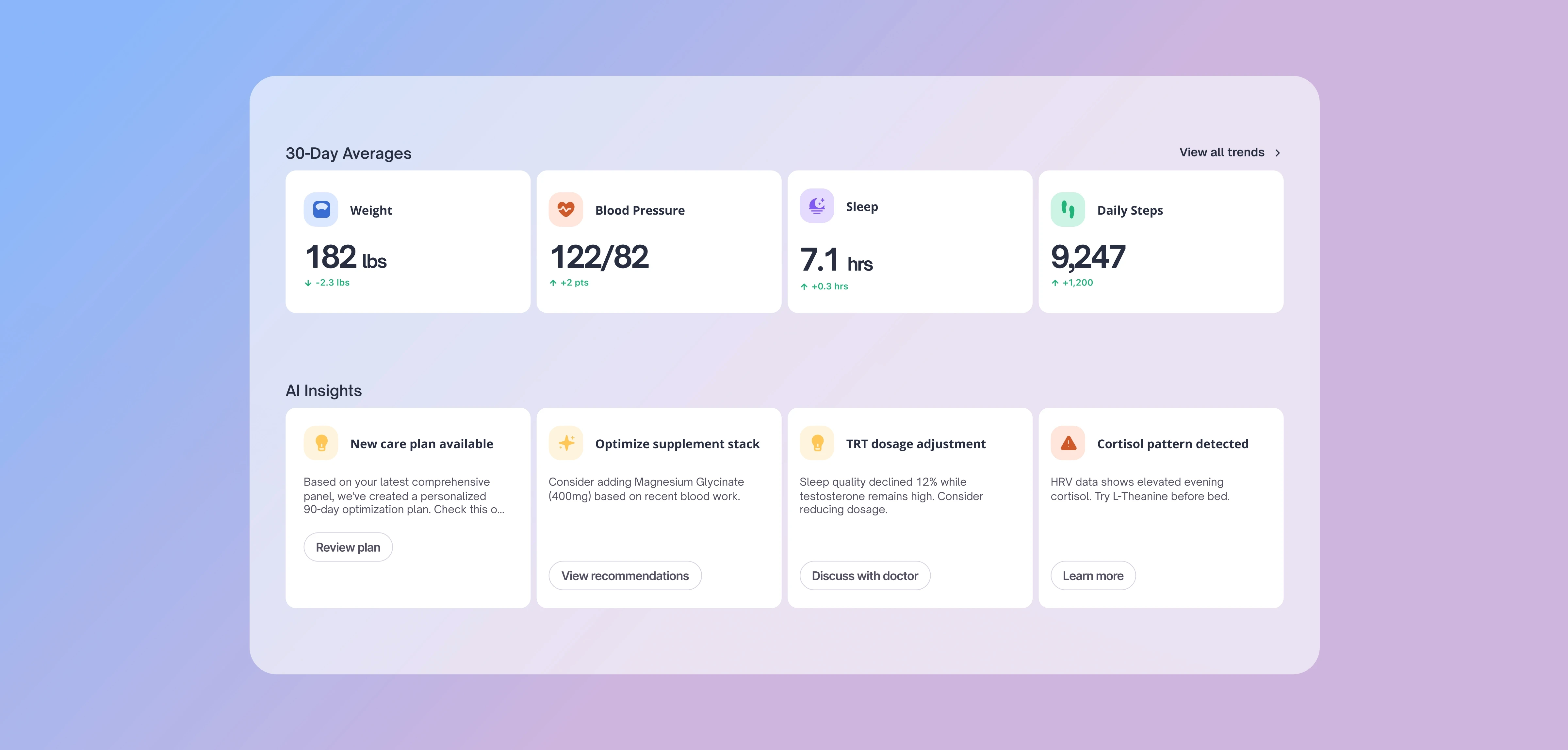
Every life stage brings new biological demands. Tracking the right metrics at the right time helps you adapt, optimize performance, and extend both lifespan and healthspan.
Your Annual Physical
Manual Data Processing
Guesswork Trend Detection
Once-a-year physical
Reactive, tested when sick
No data between visits
Once a year testing
Delayed Results
One-size dosing, set and forget
Real-Time Trend Insights
Daily smart-device data
Automated Data Sync
Quarterly Biomarker Tests
Optimal, personalized targets
Plain-language AI insights
Medications titrated to your data
Built to extend healthspan

Frequently Asked Questions
Clarity before
you commit
Answers on setup, scale, and support to remove blockers.